Sustainability & the shopper. Part III

Navigating evolving trends in 2023

Every 2 years, I embark on an exploration of the ever-evolving landscape of Sustainability. From a deep dive into data in 2019 to navigating the impacts of the pandemic in 2021, it’s become somewhat of a routine. Now, as we are approaching 2023’s closure, it’s time to make a return with the latest insights, fueled by the most recent research. The good news is that there have been significant shifts in consumer habits, concerns, and perceptions of responsibility regarding sustainability and environmental issues over the past two years. So quite a bit to talk about. Let’s get started.

Climate Change Realities and Consumer Concerns

The global impact of climate change is no longer an abstract concept but a tangible force disrupting consumption habits across diverse societies as highlighted by the latest EY Future Consumer Index. This disruption is not limited to the physical environment; it extends to the collective mindset of individuals. The surge in conversations on social media, with a notable shift from generic weather discussions to explicit references to climate change, suggests a rapid increase in awareness of its impact.

GlobeScan Healthy & Sustainable Living survey emphasizes that people are not just acknowledging climate change; they are experiencing its effects firsthand. The report notes that a tipping point is approaching where half of the global population feels greatly affected by climate change. This underscores the urgency of addressing environmental concerns on a global scale.

The EY research also reveals that combating climate change is the top global sustainability issue, closely followed by health and well-being, affordable and clean energy, clean water, sanitation, sustainable ecosystems, biodiversity, and ending poverty. The interconnectedness of these issues highlights the complexity of the sustainability challenge facing the global community.

The Challenge of Living Sustainably

While a substantial 70% of global consumers express the importance of living sustainably, the adoption of conscious consumerism remains in its infancy according to Nielsen’s Great Divide report. Mintel also indicates in their Global Outlook on Sustainability that, in many cases, consumers are more likely to engage with small-scale lifestyle changes that do not significantly alter their daily lives or consumption habits.

The intention-to-action gap is evident, with almost two-thirds (61%) of the global population lacking the awareness, motivation, and action required to live more sustainably as reported by Nielsen. A significant challenge lies in the fact that most people do not fully understand which actions have the most impact – leading to a sense of helplessness for GlobeScan. 

Nielsen’s segmentation of sustainability mindsets, ranging from skeptics to evangelists, provides valuable insights into consumer motivations and readiness for sustainable consumption. I encourage you to read the report – a link is provided at the end of this post. Speaking about segmentation, a notable trend identified by GlobeScan as well as Mintel is the growing cohort of people seeking both health and sustainability.

The Need to Tackle the Intention-to-Action Gap

Consumers express a strong interest in healthy and sustainable products, and an increasing minority is willing to pay more for them says EY. Sustainable purchasing trends are primarily driven by young people and those with families adds GlobeScan. However, Nielsen points out that the intention-to-action gap persists, with consumers facing barriers such as cost, access, and a lack of clarity regarding the environmental and ethical impact of their choices.

Kantar’s Sustainability Sector Index highlights practical barriers that contribute to the gap. These include the difficulty in discerning ethically sound products, uncertainty about where to find sustainable/ethical products, the perception that environmentally and socially beneficial products are more expensive, and the desire for clear certification explaining the environmental/ethical benefits that would influence purchasing decisions.

The recent cost-of-living crisis, as noted by Mintel and Kantar, has impacted consumer attitudes toward sustainability as well as limited the ability of ‘eco-conscious’ consumers to make sustainable choices. The trade-off between prioritizing sustainability and economic factors presents a significant obstacle, given that « sustainably marketed products cost 70% more than the category average price » according to Kantar.

Who’s in Charge of Catalyzing Change?

As pointed out in Ipsos Earth Day survey, global opinion is divided on when is the right time to invest in climate change, with 38% asserting that now is the right time and 30% claiming it is the wrong time. However, a majority agrees that the negative impact of climate change is close enough to worry about it (52% vs. 23%). Furthermore, the prevailing view is that the economic cost of climate change will be greater than the cost of measures to reduce it (42% vs. 26%).

Responsibility for action is seen across citizens (63%), government (61%), and businesses (59%) says Ipsos. The Who Cares Who Does study from Kantar challenges this view and points out a recent and notable shift in people looking towards governments, rather than companies or themselves, to champion the cause of the planet. Having said that, EY mentions that consumers still expect companies to demonstrate more leadership in reducing negative environmental impact.

Brands and Retailers: Walking the Sustainability Talk

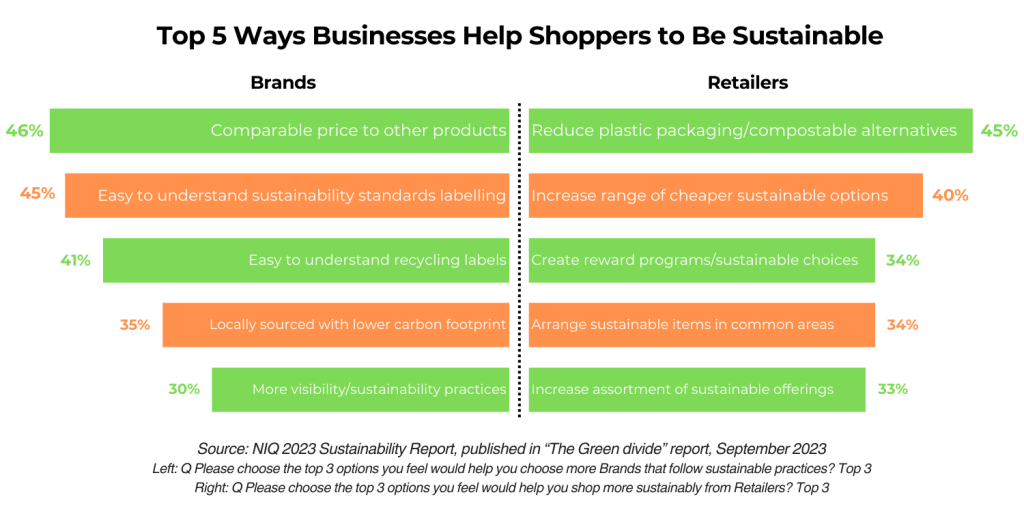
For Nielsen, consumers are calling for immediate action from brands and retailers to address sustainability issues and assist them in leading more sustainable lives. The top ways to contribute to help people be more sustainable is that brands can offer comparable prices and retailers reduce plastic packaging – note the latter is confirmed by the Kantar survey.
According to several reports, a barrier lies in a prevalence of false or misleading information about brands’ sustainable actions. For instance, 52% of people globally reported seeing or hearing false or misleading information about brands’ sustainable actions according to Kantar. Nielsen emphasizes that authenticity emerges as a crucial factor, with 77% of global consumers expressing zero tolerance for greenwashing. For certain groups, this intolerance reaches as high as 96%.

—–

In summary, we are experiencing a significant shift in awareness regarding the impact of climate change, with a growing realization from people of its tangible effects on their lives. However, and while there is a strong interest in sustainable living, a substantial gap still exists between good intentions and actual actions, driven by barriers such as cost, access, and a lack of clarity on sustainable products and practices. Economic constraints contribute to the challenge of adopting sustainable lifestyles, hindering widespread behavior change. 

Consumers increasingly look towards governments and businesses to champion environmental causes – with a shift towards public authorities in recent times. Companies – brands and retailers in particular – can contribute by offering affordable and accessible sustainable options and reducing the economic barriers associated with eco-friendly choices. Meanwhile, states can play a role in encouraging sustainable behaviors through information and incentives. 

It’s worth mentioning that greenwashing is emerging this year as a critical challenge, emphasizing the need for authenticity and transparency. Clear and substantiated communication from brands and retailers is crucial in helping consumers and shoppers make informed, sustainable choices, addressing the knowledge gap.

—–

PS: Unlike chatGPT, I provide my sources. You can read the reports by clicking on the links below:

EY Future Consumer Index (November 2023)

GlobeScan Healthy & Sustainable Living (October 2023)

Kantar – Sustainability Sector Index (October 2023)

Kantar Who Cares Who Does (September 2023)

Nielsen The Green Divide (September 2023)

Mintel Global Outlook on Sustainability (June 2023)

IPSOS Earth Day (April 2023)

If you come across an insightful report which is not in the list, please send me a message through the contact form.
Cannes Lions 2050: 35°C and stormy

Can the marketing industry help save the world?

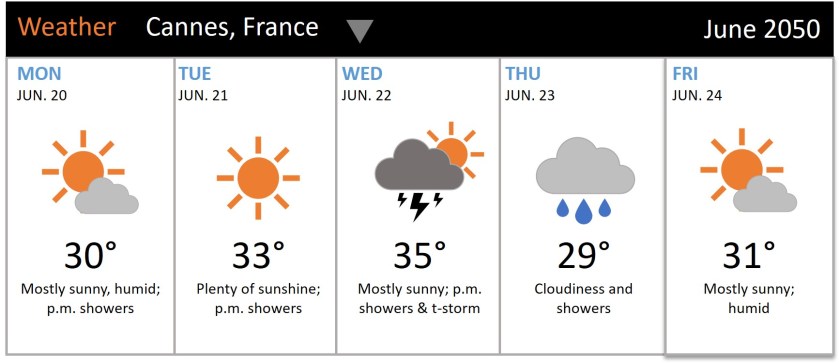
Friday, June 24th, 2050. The Cannes Lions International Festival of Creativity, which is about to close, has been chaotic, at the very least. Record heat wave without a breath of wind during the day, rain showers and thunderstorms in the evening, the 77th annual get-together of the marketing industry has been punctuated by fierce meteorological episodes, disrupting the schedule and the logistics. Wednesday bore the brunt of the extreme weather with a giant mud flow devastating most of the center down to the Croisette Boulevard and the beach. Last but not least, there was no local wine to drink to recover from the emotions! With temperatures rising, the infamous Rosé is now produced in Brittany and Provence is only proposing uninteresting hot red wines. This doom-and-gloom scenario might sound exaggerated, but it’s more or less what scientists predict if temperatures rise by 3°C by 2050.

This is a fiction to make the point that climate change is threatening our lives
Cannes Lions 2050 weather forecast (fictional… but not so much)

Thanks to alarming reports and articles from experts, scientists, journalists, writers, opinion leaders and activists, we all know why this might happen: the quest for infinite economic growth is triggering excessive usage of finite natural resources and rising levels of carbon emissions, endangering environments, driving global warming and increasing climate disorders. If we want to avoid this chain reaction, a radical change is needed, now!

As the 2022 edition of the Cannes Festival is about to take place, I’m wondering what the marketing industry is planning to do to help solve the problem. Let me begin with an important disclaimer: I’m not qualified to speak for the community – I’m just an ordinary agency guy with no metal on its shelf – but, after having worked for 3 decades in the industry, I know for sure that we have a responsibility in the acceleration of mass consumption. As I wrote in a previous article, we have been triggering (and sometimes creating) needs to sell more products and services while paying lip service to environmental and social impacts for years. It’s quite clear we cannot continue to work that way: encouraging mass consumption is driving to mass extinction. It’s high time we shift mindset and start to have a positive contribution. Or the ‘35°C and stormy’ weather forecast will become a reality during the Cannes Lions 2050.

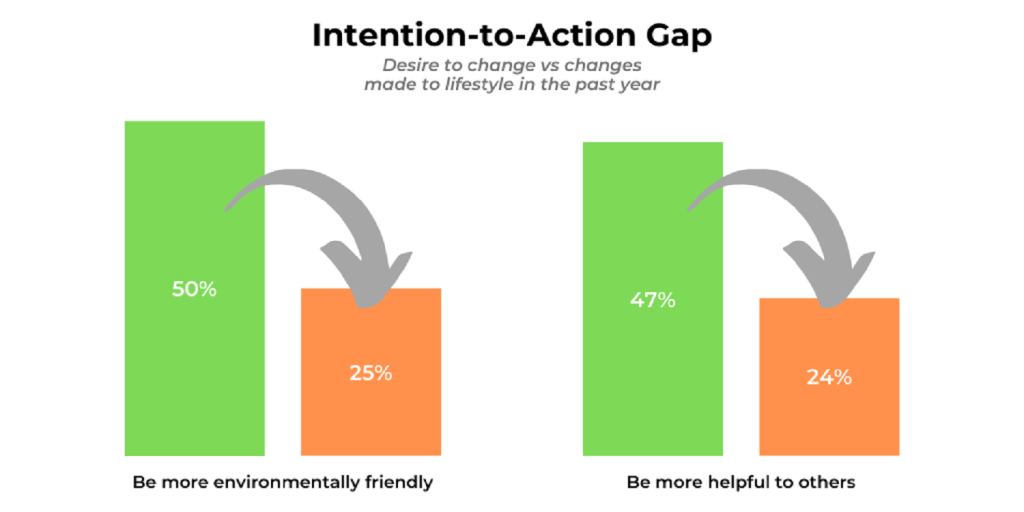
Beyond reducing our own environmental and social footprint (plenty of examples are coming to mind but that’s not the topic for today), we must help people acknowledge their impact on the planet and the society (if they have any) and enable them to adopt new regenerative habits! The good news is that around the world and across generations, people are more mindful of the environmental and social issues. The bad news is that people’s good intentions do not systematically convert into actions. There is the infamous intention-to-action gap (or say-do gap, or value-action gap…). According to the latest edition of GlobeScan’s Healthy & Sustainable Living study, nearly fifty per cent of the people have a desire to take care of the environment or help others, but only half of them made major consequent changes to their lifestyle in the last twelve months. Furthermore, conscious consumption has not progressed between 2019 and 2021 globally. A clear signal to revisit our approach to marketing.

Embedding sustainability into marketing

The truth of the matter is that, up until now, sustainable products and services have by and large remained distinct initiatives from the core – a discrete range of a large multinational brand, a new process implemented on a portion of the value chain, a start-up disrupting a category, … I know this is a bit simplistic but probably not so far from reality overall. Today, in June 2022, I guess the trillion dollar question for marketers is how to more effectively close the gaps between what people truly want or need and what people actually purchase. For some categories, regions and social groups, it will mean making sobriety more socially desirable. For others, it will mean making sustainable products accessible and affordable. For all of us, it will be about playing with the 5Ps – purpose, product, price, place and promotion – to holistically embed sustainability into marketing.

How to do it concretely is another burning question which I will not pretend to solve in this article. But I’d like to share some thoughts. While I was progressing in my writing, an old framework (my Wunderman colleagues will remember it) came to my mind: insight, imagination, impact. What a nice combination of words to inspire change:

  • Insight: understand what people think about sustainability, what actions they are taking, and why they behave the way they do along the journey; identify potential frictions and roadblocks and define how to overcome them in our categories;
  • Imagination: map insights and consult stakeholders to define what we need to change in the way we do marketing across the 5Ps; transform existing ranges, create new ones or both to enable people to find and choose products and services with greater sustainable outcomes;
  • Impact: define the journey towards positive impact at scale on people, planet, and profit for our rejuvenated portfolio of products and services; assess progress along the way – are we good enough? are we fast enough? – and close the loop to accelerate impacts.

As an industry, we have the creative power to make the world a better place. Let’s put sustainability at the core of every project and every brief – it’s now urgent and important. And I’m sure the outputs will make superb entries to the upcoming Lions Festivals!

Sustainability & the shopper. Coronavirus update

What is the impact of the COVID-19 crisis on sustainable and responsible shopping?

In summer 2019, I wrote that people were concerned about sustainability and that the planet mattered when they were shopping. But there was a significant gap between intentions and actions. 18 months later, in the middle of a global pandemic, what’s the status? Does sustainability still influence shoppers? Does the gap still exist? Based on an in-depth review of 2020 surveys, the short answer is yes and yes. Let’s drill down into data.

People are more and more concerned about sustainability

During the pandemic, sustainability concerns have persisted – and even accelerated. According to a recent Kantar survey1, climate change remains the number one issue globally for 16.9% of respondents. The second biggest issue is still plastic waste for 14.8% of respondents. And people are not only concerned: half of them have experienced environmental problems firsthand.

Worries are put into perspective by the BCG2: since the beginning of the outbreak, people are more anxious about infectious diseases and environmental issues. Further to that, two-thirds of the people think that health and environmental issues are equally concerning for the world. Kantar confirms that environmental issues keep on being important for most people after COVID-19 and a bit more than one-fifth of them believes those issues are now more critical than ever3.

People want to live, consume and shop more consciously

People are increasingly aware of their impact on the environment and they are willing to act. As revealed by GlobeScan4, a majority of people agree that what’s good for them is often not good for the environment – a surge of 13 pts in one year! And nearly three-quarters of them know the solution: they need to consume less to preserve the environment for future generations – plus 8 pts vs 2019.

People are also considering sustainability when they shop. More than two-thirds of shoppers surveyed by Capgemini in October last year5 declared they would be more mindful in their purchase habits once the pandemic is over – an increase of 3 pts in 6 months. Note that Accenture reports an even higher number: according to a research conducted in June 20206, nine consumers out of ten were planning to make more environmentally friendly, sustainable, or ethical purchases after the COVID-19 crisis!

Some shoppers plan to go as far as switching retailers or brands to align with their values. In that respect, McKinsey pointed out7 that purpose was a reason for shopping at a new (e)store or trying a new brand for a little more than one-fifth of the shoppers. And the Capgemini research mentioned above uncovered that buying sustainable products was making almost two-third of shoppers happy.

But good intentions do not convert into actions

Many people want to change their way of life but some fail to do so. According to GlobeScan, roughly half of the people have a desire to take care of the environment or help others, but only a quarter has made major changes to their lifestyle. Capgemini indicates that a significant proportion of shoppers (42% precisely) declare they have already changed their purchase preferences based on social, economic, or environmental impact. But globally speaking, 21% of the people surveyed do not want to change or do not care! Further to that, GlobeScan uncovers that more than two-thirds of shoppers have considered buying products from or speaking positively about responsible companies but only half of them have done so.

The intention-to-action gap
Source: GlobeScan 2020 Healthy & Sustainable Living survey (June 2020).

Why is that? Value has been consistently reported as a key barrier to responsible shopping. For instance, the Conference Board listed8 ‘extra-cost’, together with ‘lack of trust’ or ‘confusion regarding environmental claims’, as the most important barriers to buying brands with better environmental practices. More specifically in the UK, PwC revealed9 that the top 3 barriers to conscious spending were cost (59% of Britons), availability (51%), and lack of time to do research (40%).

Brands, retailers, and governments need to do more to unlock commitment to change

Conscious shoppers want more from brands in terms of product offering and information. According to Accenture, two-thirds of consumers expect companies to create better products and services having a positive impact on society and our planet. And half of the people surveyed by GlobeScan want companies to make it easier to understand which products and services are better for both people and the environment.

But it’s even more important for brands and retailers to bring value to shoppers. Quoting again McKinsey, in the 3rd quarter of 2020, ‘value’ was a reason to switch to a new retailer, store, or website for 55% of the shoppers and to a new brand for 69% of them. Considering the economic and personal finance outlook, value is likely to remain a key purchase criterium for the coming months.

Beyond that, companies and institutions need to accelerate the pace of change. As stated by the BCG, people expect companies to do more to protect the environment; they also want governments to embed that priority in their recovery plans. The former is confirmed by Accenture: one-third of people expect greater business involvement in improving social and environmental outcomes. And the latter is echoed by Kantar: the same proportion of people think that actions to address climate change should be a more pressing priority for governments.

To summarize, people remain concerned about environmental and social issues. They want to live, consume, and shop in more sustainable and responsible ways. But value, trust, and support from brands and governments are critical to encourage and facilitate the adoption of new behaviors.

Sources

1. Kantar. #Who Cares, Who Does? May-June 2020
2. BCG. Global survey on COVID-19 and Environment. May 2020 (pdf).
3. Kantar. Global COVID-19 Barometer Wave 7. July 2020
4. GlobeScan 2020 Healthy & Sustainable Living survey. June 2020 (pdf).
5. Capgemini. Sustainability in Consumer Products & Retail Survey. March 2020 (pdf)
6. Accenture COVID-19 Consumer Research. June 2020
7. McKinsey & Co. Consumer sentiment during the coronavirus crisis. October 2020. Average scores based on data from 8 markets (France, Germany, Italy, Spain, UK, India, China and USA).
8. The Conference Board Global Consumer Confidence Survey. April 2020.
9. PwC UK Purpose survey. July-August 2020.

Sustainability & the shopper

Are shoppers really taking a stand and acting?

Earlier this year, I wrote that sustainability and responsibility were not buzzwords any longer. Today, I’d like to support this statement with facts. It’s quite clear that people are increasingly mindful of the environmental and social crises. Sustainability and responsibility are starting to trigger new consumer needs as well as to inspire purchase decisions. Traditional currencies of quality, price, and convenience still play a critical role when people are shopping, but brand values and actions have a growing influence on mindsets and behaviors. Over the last two years, several reports from consultants, research companies, and agencies have explored the phenomenon. Let’s do a deep dive.

People are concerned about sustainability.

According to the JWT Sustainability report from 2018, almost everyone claims to be trying to live more sustainably. Eighty-nine percent of people care personally about protecting the planet. Seventy-nine percent are increasingly conscious of their impact on the planet, and fifty-seven percent know the importance of preserving it for future generations. The importance of sustainability is confirmed by PwC’s Global Consumer Insights Survey, which states that very few people (13%) do not have any interest in the topic.

People are changing their way of living. As highlighted by JWT, nearly four out of ten claim they compost waste, two-third that they limit water use in their home and half that they choose more sustainable forms of transport than cars. They avoid the use of plastic – particularly single-use items. But a majority of people think they could probably do more.

JWT reports that sixty percent of the people aim to consume less in general. Reducing their impact on the environment is a key motivation to change their consumption habits for nearly three-quarters of consumers, says Nielsen. It is confirmed by Gartner, who identifies that sixty-one percent of the people practice sustainability because it’s good for the environment. Other motivations uncovered by the consulting firm include being healthier for them and their families, being necessary to sustain the quality of life for future generations, and ultimately making people feel good.

Sustainability matters for shoppers

As PwC found in their Global Consumer Insights Survey, people are not only having good intentions: around one-third of them choose products that help protect the environment; they also buy items with less packaging. Two third of them actively buy local rather than imported goods, and a good half of them buy in bulk to minimize the use of packaging. Several studies highlight that people are inclined to pay higher-than-average prices for high-quality products, respectful of the environment and human rights. But brand owners should be careful: according to Nielsen, nearly half of the shoppers are ready to forgo a brand name to buy environmentally friendly products.

Brands commitment to sustainability
JWT Intelligence. The new sustainability: regeneration. September 2018

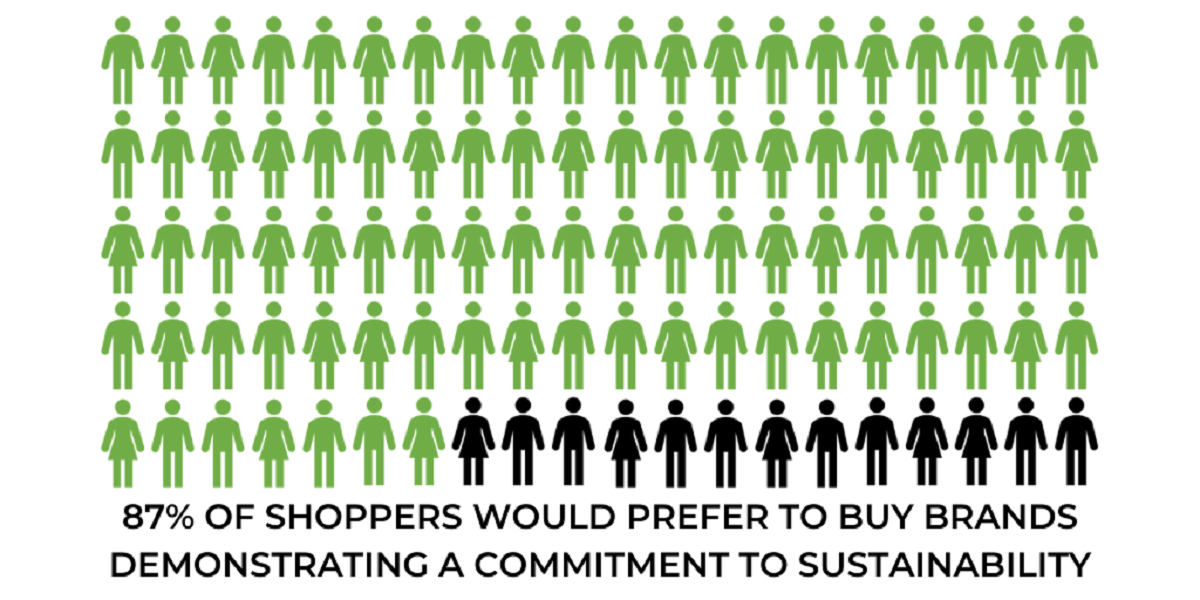
The JWT Sustainability report reveals that more than eighty percent of shoppers are willing to pick a brand showing a better sustainability record or just demonstrating a commitment to sustainability. The values and the actions of companies and brands influence purchase decisions. People can buy or ban companies and brands based on their beliefs and behaviors. For instance, Accenture states that the ethical values and the authenticity of companies drive purchase consideration, and the words, the values, and the actions of their leaders influence buying decisions too (for respectively sixty-two and sixty-five percent of respondents). When companies act in a way betraying what they stand for, people are disappointed and can even stop doing business with those companies. Related to that, they also believe their protest actions, such as boycotting a company or speaking out on social media, can make a difference in how companies behave. Edelman adds that two-third of the people claim they will buy or boycott a brand solely because of its position on a social or political issue.

There are still gaps between intentions and actions.

People are increasingly concerned with sustainability, and they tend to prefer brands and companies that they believe are good for the environment. Recent research published by the NYU Stern Center for Sustainable Business in March 2019 confirms the evolution of CPG shopper behaviors. Between 2013 and 2018, sustainability-marketed products grew five points six times faster than conventionally-marketed products, and three points three times faster than the CPG market. But categories are not created equal: sustainability-inspired purchases are less common in functional categories like detergents. The truth of the matter is that mindsets don’t systematically translate into behaviors. JWT gives indications on the order of magnitude of the gaps: although almost everyone claims they recycle (89%), only half of the people always do (52%); most people say they refuse single-use plastic (85%), but only a few of them do it every time (20%); most people agree that they buy too many clothes (86%) but almost half of them concede they often buy new clothes to keep up with trends in fashion (40%). Along the same lines, the Shopper Explorer study from Havas Paris highlights that a significant proportion of consumers think it’s still possible to keep on consuming like before without damaging the environment (numbers range from 55% in France, 61% in the US and 86% in China). Debunking myths and helping people embrace more sustainable and responsible ways of buying and consuming is critical.

What does it mean concretely? That’s for another post. In the meantime, you can click on the links below to read the full reports mentioned in the article.

Shopper marketing with purpose

Can shopper marketers help save the world?

As I wrote in my previous post, shopper marketing is about driving incremental sales. Growing is a must-win battle for shopper marketers. But the traditional model is outdated. As coined by the WEF, the world is “sleepwalking” into a significant environmental and social catastrophe, and it’s quite clear we cannot think of growth the same way. No need to be an expert to understand that keeping on encouraging consumption to sell more products is triggering an excessive usage of natural resources and rising levels of carbon emissions, endangering the environment and our societies. A more sustainable and responsible growth path is required.

The uncomfortable truth is that there is little time to change the paradigm. Not me saying it but the UNFCCC, the IPCC, the WMO, and even the WEF. If nothing decisive is put in place within the next few years, the systemic collapse of our civilization will be unavoidable. Despite the increasing coverage of alarming reports, governments and political leaders do not seem to have the ability, and not even the willingness sometimes, to acknowledge the issue and do something about it. We know their names. Fake news, that’s enough.

If governments struggle to take a stand and act, that’s not the case for citizens. For an increasing number of them, sustainability and responsibility are not buzzwords any longer. New habits like recycling, refurbishing, renting, and exchanging are forming; predating behaviors are banished. People are rapidly changing their way of living and consuming, and they expect brands to change too. As reported by consulting firms like Accenture, corporate mission, values, and authenticity play an increasing role in the decisions people make, whether it is connecting with a brand, purchasing a product or a service, or applying for a job.

Meanwhile, more and more businesses follow the path of pioneering B-Corps like Alpro, Natura, or Patagonia and start to respond to those new expectations from customers, employees, and communities. Realizing that sustainability is imperative to thrive, they think and act differently, changing the way they create, produce, and deliver goods. “Executives express a genuine commitment to improving the world,” wrote Deloitte in the “Industry 4.0 readiness report“.

inspiring people to make better choices

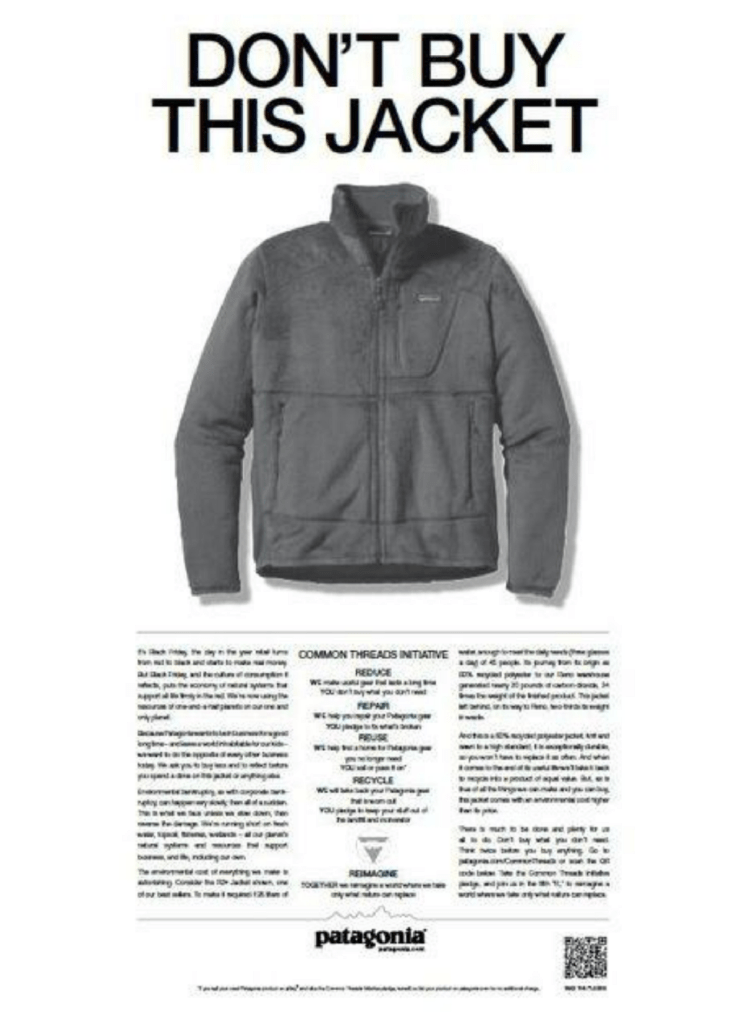
Business functions like R&D, manufacturing, and supply chain are evolving their practices, what about shopper marketing? What can shopper marketers do to help solve environmental and societal issues? Time to recall a well-known concept: the purpose. Initially defined at the corporate level, the idea of purpose permeated the marketing world. Having a purpose has many virtues: it increases valuation; it provides a competitive advantage; it drives preference and engagement; it brings companies and teams together. If a corporation or a brand can have a purpose, why not the shopper marketing community? People expect brands to pursue a higher purpose than just selling; for shopper marketers, it could translate into something like ‘inspiring people to make better choices’ rather than ‘trying to sell more.’ No more spam and scam. We would stop churning out more products through mass communications and promotions, while just taking baby steps on sustainability. And instead, we would start encouraging people to buy products more rationally, in smaller quantities but of better quality. Or even telling people not to buy at all, as Patagonia did with its “Don’t buy this jacket” ad back in 2011.

dont-buy-this-jacket-black-friday-and-the-new-york-times
Patagonia advertisement from the Friday, November, 25, 2011 edition of The New York Times

No doubt that doing excellent shopper communications could help advance the Sustainability agenda, but, to have a real impact, shopper marketers would have to gain more authority within companies. To make a difference, we would need to influence decisions across the 4Ps, not just Promotion. Product, Price, and Place are as crucial as Promotion – if not more – to offer products people want to buy, rent, share, or exchange, at affordable and transparent prices, through channels that are mindful of the environment and the people. When strategies, plans, and projects are developed, we should challenge ourselves, our colleagues and our partners, to ensure we market products and services that are doing good for the wallet, the people and the planet.

But having a higher purpose and a bigger scope is not enough. As Peter Drucker once said, if you can’t measure, you can’t manage. And if you can’t manage, you can’t improve. A new approach requires a new measurement framework, not only assessing the effectiveness and efficiency of shopper marketing activities but also considering their environmental and societal impacts. When I was musing over this question, one thought came to my mind: what about bringing together John Elkington’s Triple Bottom Line and Fred Reichheld’s Net Promoter Score? Call it the PSR score – for Profitability-Sustainability-Responsibility score. A set of indexes assessing the impact of shopper marketing decisions against the economic, environmental, and social dimensions. A real conundrum if you consider the heterogeneity of variables, sources, and timeframes to integrate but not something the community could not collectivity crack.

Putting sustainability into shopper marketing is not going to be an easy exercise. It will require courage to face and solve tough issues. It will necessitate commitment and resilience. It will mean investing in the long term rather than focusing on monthly sales. But, at the same time, it will be exciting, galvanizing, and gratifying – particularly for young interns and professionals. As underlined by Rainer Strack from BCG in Davos, “a company purpose is so important for the younger generation; it gives [them] a much better feeling for a company.”

Call to immediate action.

To conclude this article, I genuinely believe that we, as shopper marketers, have a once-in-a-lifetime opportunity — and frankly, a moral obligation — to start doing things differently. It’s true that the size and the abstraction of the challenge are overwhelming. It’s also true that the urgent often drives out the important. But now, it’s important and urgent. As the 16-year-old climate activist Greta Thunberg said at the COP24 audience in Katowice, “You are running out of excuses, and we are running out of time.” And looking into the reports on youth school strikes happening every Friday, she is not the only one asking for immediate action.

Now is the time to move on and help save the world. May the force of Good be with us.